Wednesday, March 18, 2015

Division 32 President, Krishna Kumar, PhD: My Identity


Race, ethnicity, and religion continue to plague interpersonal relations throughout the world at the individual, societal, and international levels.  People appear to hold strong beliefs about racial, ethnic, and religious differences and about the inferiority and superiority of their own groups.  These beliefs seem to have no national boundaries.  Such beliefs simply would not go away despite many societal efforts in the form of affirmative action policies, laws, interfaith dialogue, and many positive everyday interactions with peoples from different backgrounds.  Central to such beliefs are the questions  “who am I,”  “who are we,” “are we different from each other,” or “are we pure anything?”
 
Unfortunately, local, rather than global human community perspectives seem to shape people’s identities.  Thus, traditionally my identity would involve having been born and raised in India in a Hindu family of a certain religious and caste orientation observing practices dictated by my family and speaking a particular language that I claim as my mother tongue. 
 
I moved from India in 1967 to a new country and adopted it as my home adding a completely new perspective to my identity.  Now I have a new identity as an Asian Indian American living among a variety of people with different belief systems.  Back in India, my relatives may have given me a partial new identity as someone similar to but different from them.
 
I had my DNA analyzed in an effort to understand my current identity from my ancestry.  What follows may sound like science fiction, but our saliva contains an enormous amount of information.  The DNA analysis was quite telling about the migratory patterns of my ancestors from the beginning of humankind from Africa to many parts of the world.  In this process of continuous migration over thousands of years, my ancestors perhaps like anyone else’s, mixed and remixed with different peoples changing and re-changing their linguistic, religious and cultural practices.  Thus, I realized that my current identity as an Asian Indian born in a Hindu family is simply accidental to my birth in India, which has little or no significance in the larger context of a global human community.  We are all products of such mixtures ever since human beings began to walk.  Race, ethnicity, religion, and culture are not DNA deep.  At this point, I invite you to read about the details of my DNA analysis and their implications written in my blog on PsychologyToday. Com:


By V. Krishna Kumar, Ph.D. on April, 26, 2013 in Psychology Masala
 
Receiving my DNA analysis on my ancestral migration patterns was an eye opener, making my erstwhile readymade answer “I am from India” not right anymore. Read More


Sunday, March 8, 2015

Hearing Voices: Tracing the Borders of Normality


In this article, in The Lancet Psychiatry, linked below, Rhianna Goozee talks about the emergence of the Hearing Voices Movement. She discussed the way research has demonstrated how the line between "healthy" and "normal" minds has been blurred. She examines the hypothesis that early intervention and pathologizing experiences may actually increase rather than decrease the risk of psychosis.


Full text article here:

Saturday, March 7, 2015

"Is clinical psychology fearful of social context?" -- a lecture by Professor Mary Boyle


Professor Mary Doyle speaking at 2014 Division of Clinical Psychology annual conference in Glasgow.

Thursday, March 5, 2015

Psychotherapy Found to Be Equally Effective for Racial and Ethnic Minorities in Treatment of Depression

In a study published in Psychiatric Services, Burçin Ünlü Ince and colleagues (2014) conducted a meta-analysis to investigate whether and how effective psychotherapy is for racial-ethnic minority groups when they are treated for depression. The study utilized a total of 56 randomized controlled trials. Overall, the effect size was moderate (g=50), and in bivariate and multivariate analysis, race-ethnicity was found to have no moderating influence on outcome of psychotherapy for depression. 
The researchers report: "Results suggest that psychotherapy is equally effective regardless of care seekers’ race-ethnicity. Future research should focus on filling in the gap between effective mental health care and the delivery of these services."

Wednesday, March 4, 2015

Presence of Meaning in Life Associated with Psychological Well-Being

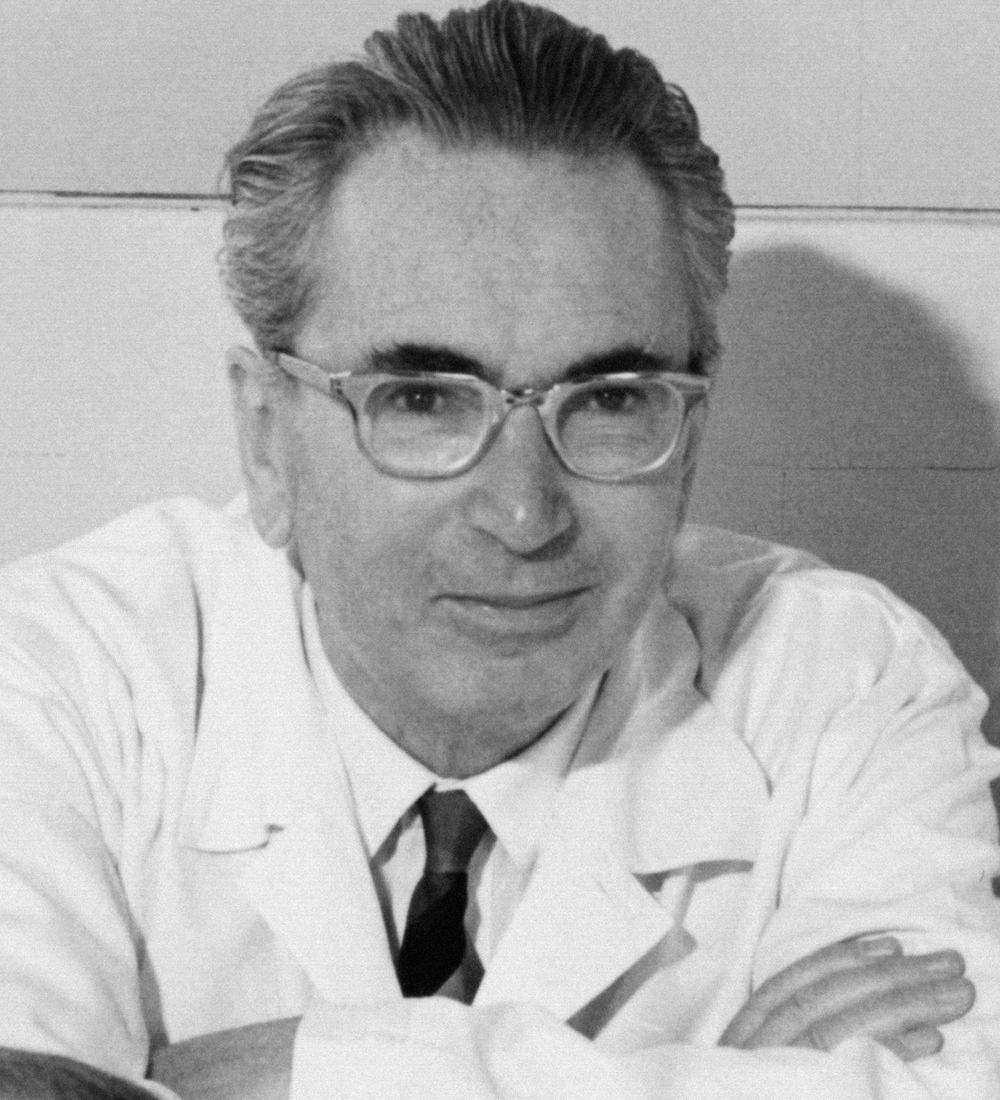
Viktor Frankl, existential and humanistic psychologist and author of Man's Search for Meaning, pioneered the investigation of meaning in life as an adaptive psychological attribute. In a study that collected data cross 13 different universities, Jessie Dezutter and colleagues (2013) studied the impact of meaning in life on psychological adjustment in a sample of 8,492 American adults across 30 colleges and universities.

The researchers note that meaning of life has been defined as having a sense of coherence, an enhanced understanding of the world, and in finding a sense of purpose in life. Previous research has found a link between higher meaning in life in positive outcomes including more positive emotions and higher vitality, as well as less symptoms of depression and lower risky behavior.

The study distinguished between two dimensions of meaning in life:

(1) Presence of Meaning -- perception of significance, purpose and value

(2) Search for Meaning -- intensity of effort to establish or increase meaning in life

The study identified five types of people:

(1) High Presence--Low Search

These individuals scored highest in measures of psychological well-being and lower in negative indicators of psychosocial functioning.

(2) High Presence--High Search

These individuals scores the second highest in measures of psychological well-being, but not as high as the high presence-low search group.

(3) Low Presence-Low Search

Those scoring in this category were the lowest functioning of the sample.

(4) Low Presence-High Search

While still scoring low in functioning, they scores higher than the Low Presence-Low Search group. In particular, they scores higher in eudiamonic and psychological well-being, and scores lower in tendencies to break rules and were less likely to report social and physical aggression than the Low Presence-Low Search group.

(5) Undifferentiated

Scored at intermediate levels.

Full Text of Article Here:

http://sethschwartz.info/wp-content/uploads/2010/08/Meaning-in-Life-Clusters1.pdf

Tuesday, March 3, 2015

Authentic People Are More Psychologically Adjusted and Seen More Accurately By Others

In Journal of Personality and Social Psychology, Lauren J. Human and colleagues (2014) examined why well-adjusted people seem to be judged more accurately. Their investigation led them to discover that those who are well-adjusted are viewed more accurately due to the congruency between their personality and actions. In other words, more well-adjusted people were more authentic or congruent, and therefore were more transparent to others as a result. These findings support a key concept of humanistic psychology identified by Carl Rogers: a key ingredient of a fully functioning personality is congruency or authenticity. 

Monday, March 2, 2015

Existential Variables of Meaning of Life and Hope Mediate the Relationship Between Religion and Psychological Well-Being

In Journal of Religion and Health, Marcin Wnuk and Jerzy Tadeusz Macinkowski (2012) investigated the relationship between religious belief and psychological well-being. In this study, they used a variety of measures, including the Daily Spiritual Experiences scale, Purpose in Life Test, Hearth Hope Index, Cantrol Ladder, and Positive and Negative Affect Schedule. As in previous research, spiritual experiences were positively related to satisfaction with life and positive affect, but were not found to be related to negative affect. Meaning of life and hope mediated the relationships between spiritual experiences and both positive psychological variables of satisfaction with life and positive affect. These findings suggest that people who are religious tend to be more satisfied with life and have more frequent positive emotional experiences, in part, because they have more meaning in life and are more hopeful.